



-1761147112036.png)


SICILIANS
Vincenzo Arcobelli, From Paternò to New York: «I’ll Tell You the Story of America’s Little Italies—From Ghettos to Cultural Icons»
“In the U.S., the mafia/Godfather stereotype has partly faded: today Sicily is seen as a top Italian destination. But from here, it breaks my heart to see its potential wasted.”


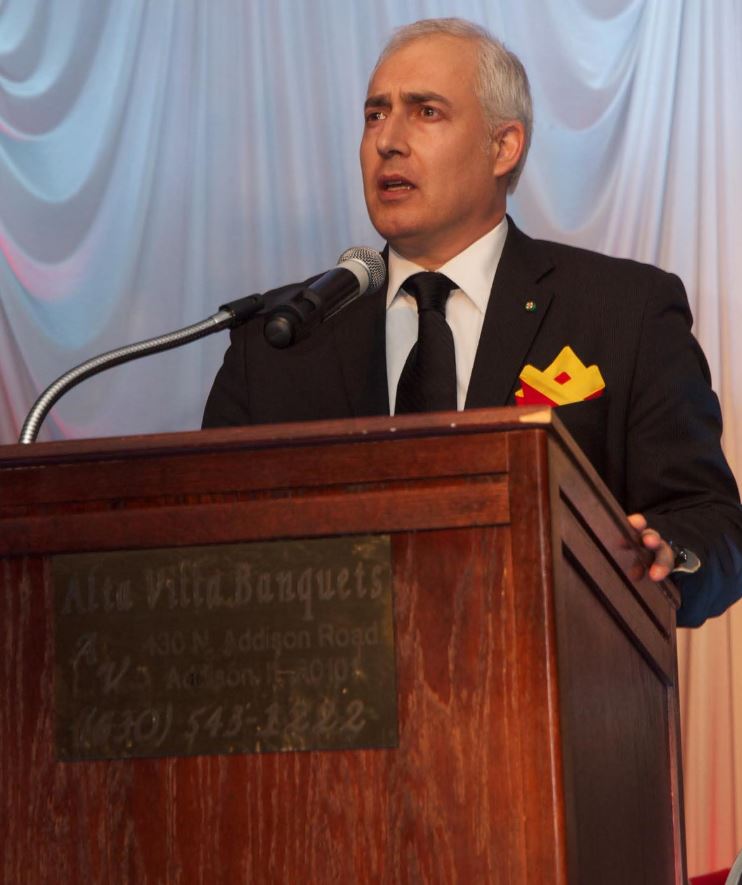
Vincenzo Arcobelli embodies several lives at once. A former paratrooper in Italy’s Folgore Brigade, he is now the director of a training center for the world’s largest flight school. Above all, since 2004 he has been deeply involved in representing the Italian community in the United States, where he has lived since leaving his hometown of Paternò at the age of 18. Now 56, Arcobelli has served since 2023 on Italy’s General Council of Italians Abroad (CGIE), the advisory body to the Italian government and Parliament on issues affecting Italian communities worldwide.
What does the Italian-American landscape look like today?
“Although the U.S. Census reports around 16 to 18 million Americans who claim Italian ancestry, the real number is closer to 25 million, because many do not declare it. Italians are the fifth-largest ethnic group in the country. Most are descendants of earlier immigration waves, while Italian-born citizens registered with AIRE number about 450,000. The largest concentration is still in the Northeast, particularly the New York Tri-State area, although in recent years the South has seen growing numbers.”
“Little Italies today are defined mainly by annual traditional events. They are no longer the daily heart of Italian-American life, but they function as symbolic anchors—places of memory, celebration and tourism that keep an identity alive, albeit one that is now hybrid rather than enclaved. They reflect the success of assimilation: from necessary ghettos to optional cultural icons.”
When does Sicilian identity most strongly re-emerge?
“Mainly during religious, cultural and community festivals, which bring people together around traditional food, processions and ethnic pride. There is the Feast of St. Joseph on March 19, with altars, zeppole and vegetarian food in New Orleans, Buffalo and parts of Texas. San Gennaro in September in New York’s Little Italy, with processions, street food and events. October is Italian Heritage Month, with Columbus Day parades and Italian festivals.”
What is your view on the controversies surrounding Columbus Day?
“They are often exaggerated and instrumental, especially when used to indirectly attack Italian-American heritage and pride, turning a historical celebration into an ideological battleground. Columbus Day was established in 1892 after the lynching of 11 Italians of Sicilian origin in New Orleans, to counter widespread anti-Italian and anti-Catholic sentiment. It became a federal holiday in 1937. For Italian Americans, it symbolizes pride in having overcome poverty and marginalization.”
How did you end up in the United States?
“In the early 1990s I moved to the U.S. to explore opportunities and improve my professional path, collaborating with companies importing Made in Italy products. Since 1996 I have been a Captain Pilot Instructor in commercial civil aviation, with roles as check pilot, examiner and safety officer. Today I am also director of the training center of the world’s largest flight school.”
How does Sicily look today through the eyes of a Sicilian living in the U.S.?
“That question touches me deeply. It breaks my heart to see its immense potential wasted by structural problems, bureaucracy and a mindset that too often resigns itself to ‘nothing will ever change.’ Sicily is an extraordinary island that deserves a far brighter future than the one it currently manages to build for itself.”
How do Americans perceive Sicily today? Has the “Godfather” stereotype been overcome?
“Partly, yes. Americans who travel or are well informed now see Sicily as one of Italy’s top destinations—for extraordinary food, millennia of history and relaxation. That said, the legacy of The Godfather remains deeply rooted in American pop culture and still surfaces in jokes or ironic references.”
Houston will be named the Italian Capital of Creativity worldwide in 2026. What does that mean?
“It’s a prestigious recognition that will turn Houston into an international stage for Italian creativity, with cultural, economic and tourism benefits for both sides. A full year of initiatives is planned: interactive apps, educational programs for schools, cultural events, exhibitions, workshops and community activities.”
This year Catania gained a direct flight to New York.
“A concrete breakthrough. And the ongoing infrastructure work is laying the groundwork for even greater growth, potentially transforming Catania into a Mediterranean hub.”
You are from Paternò, which is currently facing difficulties, including the dissolution of its municipal government due to mafia infiltration.
“I grew up in Paternò, a city I carry in my heart. I return whenever I can and still have family there. The dissolution and commissioners are not good news, but I hope the situation will be resolved soon. It can be a valuable opportunity to turn the page, strengthen legality and build a more transparent and just future. Paternò is an honest, resilient community full of talent: excellence in agriculture, innovative businesses, and many citizens who have distinguished themselves worldwide in institutional, political, artistic, cultural, scientific, financial and entrepreneurial fields.
“I invite people to look ahead with optimism. To young people, I say: gain experience abroad, grow, and then return with fresh ideas and new skills—overcoming the clientelist mentality that stifles merit, and cultivating professional paths aligned with their true aptitudes.”
© RIPRODUZIONE RISERVATA