



-1761147112036.png)


SICILIANS
Salvatore Vinci, the WHO Engineer Bringing Light—and Saving Lives
Named by Time among the world’s 100 most influential figures in environmental policy, he electrifies hospitals across Africa using solar power. His daily motto: “A kilowatt-hour can save a life.”
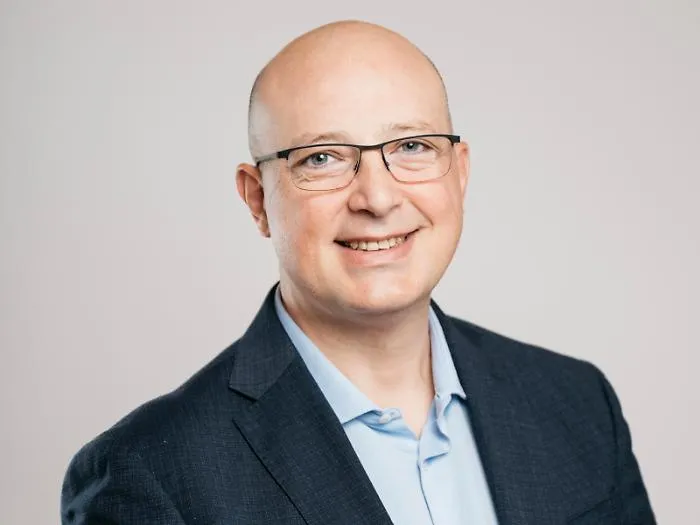

His name appears on Time’s list of the world’s most influential figures shaping climate policy. Alongside scientists and entrepreneurs selected globally are figures such as King Charles III, European Central Bank President Christine Lagarde, Pope Leo XIV, Brazil’s President Lula and California Governor Gavin Newsom. Among them stands Salvatore Vinci, 50, a Sicilian from Agrigento, now Technical Lead of the Healthcare Facilities Electrification program at the World Health Organization.
Based in Geneva—home to many UN-affiliated institutions—Vinci’s role may surprise those who still associate the WHO “only” with vaccines and medicines. In fact, his work sits at the intersection of health, energy and climate resilience: bringing reliable electricity to healthcare facilities in some of the world’s poorest regions, particularly in sub-Saharan Africa.“We work to provide access to electricity in developing countries, especially in health facilities,” Vinci explains during a break from field coordination. “The WHO deals with everything related to health—not just medicines or vaccines.” His expertise has led him to co-author reports not only with the WHO but also with the World Bank. In recent months he has coordinated projects in the Democratic Republic of the Congo, Chad and the Central African Republic.
A globetrotting Sicilian, Vinci grew up in Agrigento—“in the Via Gioeni neighborhood,” he specifies—trained in Palermo where he earned a degree in environmental engineering with top honors, then moved first to Rome at Italy’s Ministry of Economic Development and later to the United Arab Emirates at the International Renewable Energy Agency (IRENA). In 2020 came the move to Geneva and the WHO.
“After graduating, I completed a master’s degree and an internship at the Ministry, then stayed in the Energy Department for seven years,” he recalls. “In 2010 I left the comfort zone of Via Veneto and moved 6,000 kilometers away to IRENA, focusing on renewable energy for developing countries.” Over a decade he rose to head partnerships and technical support to countries, including sub-Saharan Africa. By 2020, the WHO called—by then Vinci was already considered a leading expert long before Time made it official.
The work is as rewarding as it is demanding. Frequent moves across continents take their toll. “My wife Elena—who I met at the Ministry—and our children Sofia and Paolo have always been incredibly supportive,” he says. “Otherwise it would be impossible.” The family has lived through each transition: from Sicily to Rome, then to the Emirates, and on to Geneva. His children, now 14 and 11, were born in Abu Dhabi.
The turning point of his career came in the field. “I led teams that provided electricity to 1,300 healthcare facilities in Ethiopia, Zambia and Pakistan; we supported projects in Somalia, Sudan and the DRC—around forty countries in total,” Vinci says. “But one episode changed everything.” In Tanzania, a doctor told him: “You talk about the environment, but I lost two babies because there was no electricity to power the incubators.”
“That was my sliding doors moment,” Vinci explains. “A kilowatt-hour can save a life.” In many places, women give birth by candlelight; medicines and vaccines cannot be refrigerated; anesthesia machines fail due to voltage instability. One billion people rely on health facilities without reliable electricity. “We take energy for granted, yet in many places access—or lack of it—means life or death for millions.”
The solution is solar. Electrifying facilities with autonomous solar systems reduces dependence on diesel—often scarce due to climate-related disruptions—and strengthens resilience while protecting the environment. “Engineering in service of health,” Vinci says. “In service of life.”
Despite his global role, his bond with Sicily remains intact. “I return often in the summer,” he says. “I’m increasingly encouraged by young Sicilians trying to build something new. Sicily teaches you to live with complexity—it helps you read reality. I still see contradictions, but also a generation trying to change course. Staying or leaving should be a choice, not a necessity.”
Travel, for Vinci, is intrinsic to the mission. Today his teams are installing 1,300 solar systems across Zambia, Uganda, Ethiopia and Pakistan, and supporting post-Ebola recovery in the DRC. “We now power entire facilities—not just vaccine refrigerators,” he notes. “You cannot run incubators, oxygen concentrators or basic life-saving devices without electricity. If we have the technology to reach Mars, we certainly have the technology to power an incubator. Health must be the priority—because that’s where the most fragile lives are saved.”