



-1761147112036.png)


SICILIANS
Santo Santoro, Minister and Entrepreneur: “Close to Workers and to the Elderly, with Sicily in Heart”
From Francavilla to Brisbane, a reference point for those looking to invest in Australia: “This is still a land of opportunity for young people—but good jobs require English proficiency”
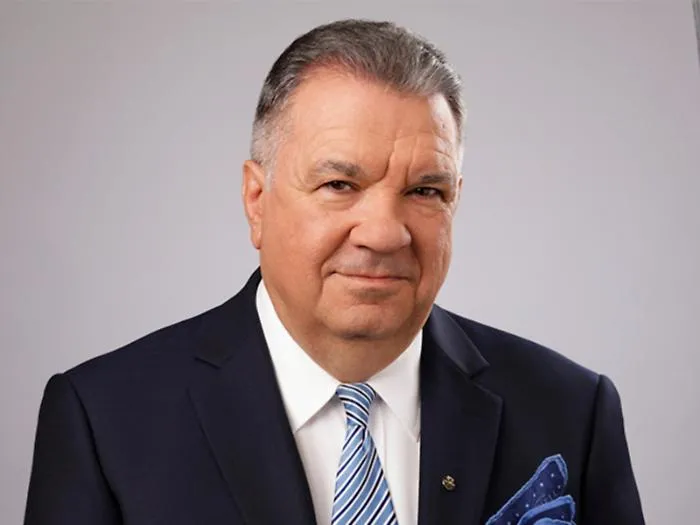
Santo Santoro

The conversation with Santo Santoro immediately takes on a familiar tone. Within minutes, the discussion moves naturally toward personal and family matters, as if speaking with someone long known. Santoro, a seventy-year-old native of Francavilla di Sicilia, is today a prominent Australian businessman and former government minister, yet he speaks with the calm authority of someone firmly grounded in enduring values.
“I’ve just attended my cousin’s funeral in Canberra,” he says shortly after returning to Brisbane, where he is spending the New Year. “He wasn’t young anymore, but the pain is just as deep. I strongly believe in family. It is central to my life. Without my family’s support, I would not be who I am today.”
That identity encompasses both public service and entrepreneurship.
“I’ve worked my entire life and I’ve never forgotten where I come from. When I travel in my role as President of the Queensland Chamber of Commerce, I often meet other Sicilian-Australians. A few words in dialect are enough to light up their faces. But attachment to one’s roots goes beyond language. At Easter I have traditional marzipan lambs shipped from Sicily, and in early November I still observe the customs tied to remembrance.”
To understand Santoro’s trajectory, one must start at the beginning.
“I was born in Francavilla di Sicilia on April 27, 1956. My father Alfio was a gardener, my mother Sebastiana took care of the family. We didn’t lack anything, but my father realized that Australia could offer opportunities we didn’t have.” He emigrated first, then brought his family to Queensland, where two more sons, Gaetano and Mario, were born.
His father’s early work was harsh.
“He cut sugar cane, like many Italians at the time—mud, snakes, relentless heat. He saved every dollar to bring us over, then became a construction laborer. He was highly respected because he was strong, honest, and tireless.” Alfio passed away twenty years ago; Sebastiana three years ago. Both are buried in Francavilla.
“It was my mother’s wish. She told me, ‘I followed you around the world, but when I’m gone, bring me back to my land.’ I honored that promise.”
Sebastiana also worked in Australia, first in a fish-processing plant, then as a seamstress, before dedicating herself fully to the family.
“We lived according to Sicilian traditions—food, customs, extended family. It was as if we were still in Sicily. I have countless godchildren; community has always been central.”
Success, Santoro insists, came only through hard work.
“When I arrived in Australia, I didn’t speak a word of English. I studied while working to support myself—dishwasher, parking attendant, shipping clerk.” He eventually earned two university degrees, both with honors, in Economics and in Arts.
“That education also opened the door to politics. One fact I’m particularly proud of: since 1901, fewer than 35 people in Australia have been elected at both state and federal levels and later served as ministers. I am one of them.”
The Italian community played a decisive role.
“I often acted as a bridge between the community and Australian institutions. I’ve always been a center-right conservative in a country largely governed by the left.” When he left politics, he was encouraged to run for office in Italy as well.
“I served as coordinator of Forza Italia in Australia, but ultimately declined.”
As a minister, however, his impact was tangible.
“As Minister for Vocational Training and Industrial Relations, I reformed workers’ compensation and strengthened workplace safety regulations. Later, as Minister for the Aged, I introduced long-term funding programs and advanced financial instruments to protect older citizens.”
Why leave politics despite consistent public support?
“To protect my family. A financial matter with no wrongdoing escalated into intense media pressure. Reporters surrounded my home for days, even attempting to interview my children, who were 11 and 9 at the time. I chose to resign. I left on my own terms.”
Today, Santoro is focused on business.
“I help Italians invest in Australia and Australians invest in Italy. I work with companies such as Fincantieri, Mapei, and the Italian State Railways. The network I’ve built allows me to be effective.”
Australia remains attractive for newcomers.
“Many Italians still arrive, often highly skilled—engineers, doctors, teachers. Some start in restaurants, just as I did, and then find their footing. But one thing is essential: English.”
His sons Andrea and Lachlan, now in their thirties, have pursued different paths.
“My wife Letizia, who has Scottish roots and has been by my side for forty years, and I are immensely proud of them.”
Approaching seventy, Santoro acknowledges the need to slow down.
“But one thing is certain: today I feel more Sicilian than when I first left Sicily.”
Before parting, he recalls a powerful image.
“The final curve before Francavilla. The town opening up in all its beauty, the countryside of my childhood—citrus groves, vineyards, the San Paolo river. Harvest days starting before dawn, lunch with homemade bread, sausage, and olive oil. These images stay with me. Returning home, visiting my parents’ graves, seeing my cousins. I’m proud of what I’ve built and of the Australia that welcomed so many Italians. But memory matters. When you forget where you come from, you lose your integrity.”