



-1761147112036.png)


world
One Billion for Peace? Inside the US Draft Linking "Board for Peace" Membership to a $1 Billion Check
An out-of-the-ordinary financial clause, a mandate firmly decided in Washington, and a diplomatic construction site involving about sixty capitals: here's what's really in the draft statute of the new body for Gaza and why many countries are reckoning—not just politically—with the proposal.
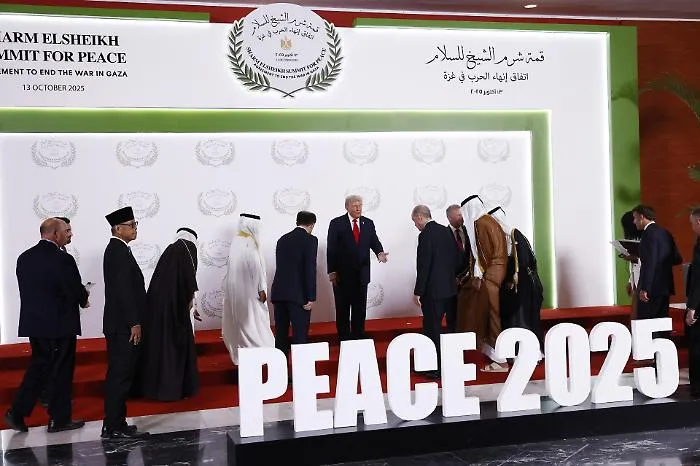

A document stamped by the US is circulating among the foreign ministries of about sixty countries. At its core, a bombshell clause: $1 billion in cash to secure a seat "beyond three years" on the "Board for Peace", the international body the White House wants at the heart of Gaza's transition. Not a voluntary contribution, but an entry ticket for a stable seat, decided by the Board's president — Donald Trump.
The draft, reviewed by Reuters and previewed by Bloomberg, upends the rules of multilateral organizations. Maximum three-year membership, renewable "at the Chairman's discretion"; exemption for those paying over $1 billion within the first year; one vote per member, but all deliberations "subject to the Chairman's approval." A blend of political governance and financial leverage sparking contrasting reactions.
What the Draft Provides in a Nutshell
Base Mandate: Three years, renewable only at the Chairman's judgment (Trump as inaugural president).
Billion-Dollar Clause: Cash payment within 12 months for "permanent" membership.
Central Powers: Trump selects invitees, approves decisions, and steers strategy.
Purpose: Stabilization, reconstruction, and governance in post-war Gaza.
The Board would launch with at least three ratifications. It involves an Executive Board with names like Tony Blair, Ajay Banga (World Bank), Jared Kushner, Marco Rubio, and a Gaza Executive Board featuring Hakan Fidan (Turkey), Sigrid Kaag (ex-UN), and Reem Al-Hashimy (UAE). Invites to India, Jordan, Turkey, Egypt, Canada, and others: the full list is slated for Davos.
Gaza at the Center: Three-Phase Plan
The White House ties the Board to a roadmap: a technocratic Palestinian committee (NCAG, led by Ali Sha’ath), an international stabilization force (commanded by General Jasper Jeffers), Hamas disarmament, and reconstruction. It leans on UN Security Council Resolution 2803 (2025), but details on audits and fund management remain vague.
Reactions: Israeli Skepticism, Pragmatism Elsewhere
Israel, especially the right wing of Netanyahu's coalition, hits the brakes: "Direct military administration, not multilateral with Turkey and Qatar." Arab and international responses? Curiosity mixed with doubts on transparency and Trump's powers. Analysts: an "alternative forum to the UN to bypass vetoes."
Why the Billion Changes Everything
Commitment Test: Separates serious players from bystanders.
Rapid Fund: Mobilizes immediate cash for infrastructure.
Extra Leverage: Controls renewals and priorities.
Precedents? Post-war trust funds (Bosnia, Iraq), but here the Chairman dominates and cash buys status.
Next Steps: Davos and the Countdown
Three ratifications to launch. Davos brings first official names. Open questions: Who will pay? Anti-corruption safeguards? Coordination with World Bank and EU?